Buying An Estate Home In Pinecrest: What To Look For
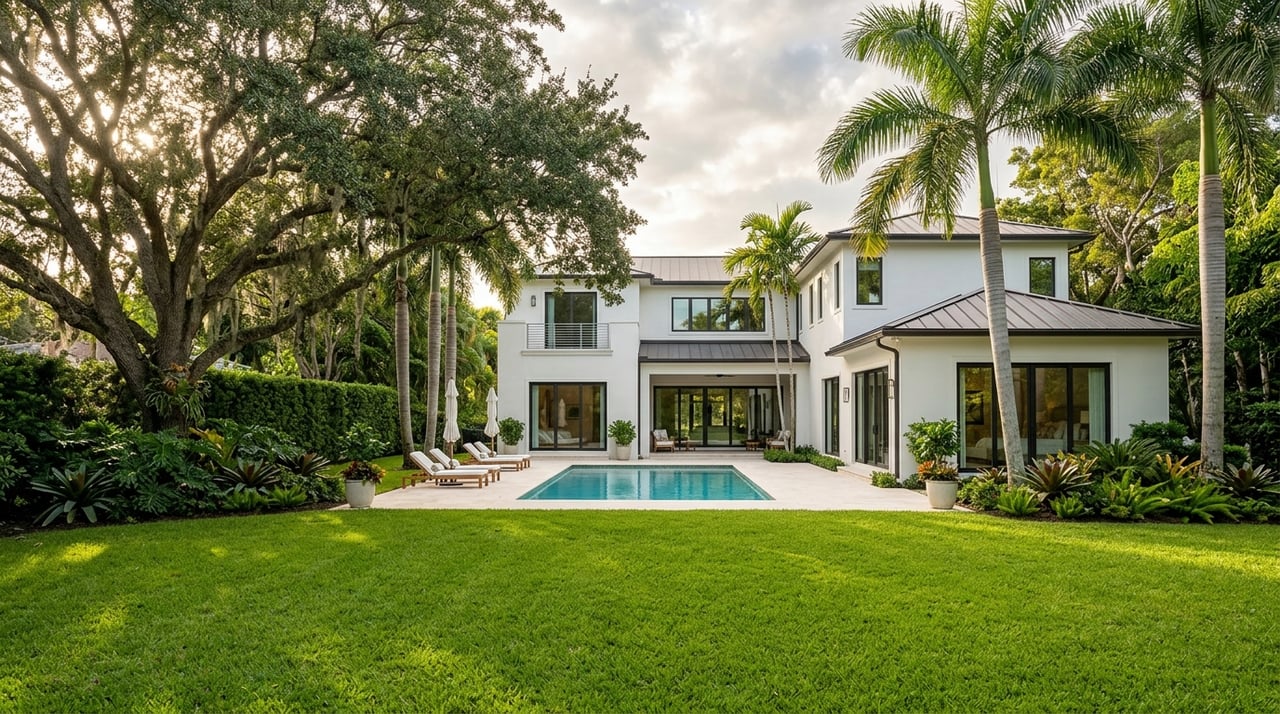
Buying an estate home in Pinecrest can be exciting, but it also comes with details that are easy to miss if you focus only on the house itself. On large lots, what you can build, remove, expand, or improve often depends on zoning, trees, septic systems, drainage, and flood rules just as much as square footage or finishes. If you want to make a smart purchase, this guide will help you look beyond the surface and understand the property features that can shape long-term value. Let’s dive in.
In Pinecrest, estate-home value is often tied closely to the land. The village uses a low-density land-use framework, and different residential categories can affect whether your plans for an addition, guest space, or future redevelopment are realistic.
According to Pinecrest’s Comprehensive Development Master Plan, residential categories include EU-1C, EU-1, EU-S, EU-M, and RU-1, each with different density standards. That means two properties with similar lot sizes may not offer the same flexibility for future use.
Before you fall in love with a layout idea, verify the parcel’s zoning and future land-use designation. This is especially important if you hope to add living space, rework the footprint, or rebuild over time.
Pinecrest also notes that the Zoning Board can consider variances for items such as setbacks, lot coverage, frontage, yard regulations, open space, landscaping, and impervious surface ratio. In practical terms, expansion potential depends on more than lot size. It also depends on where the existing house, pool, driveway, and other improvements sit on the site.
Pinecrest’s permit plan requirements require site plans to show lot dimensions, easements, setbacks, utilities, pervious and impervious areas, and second-floor area. For a buyer, this offers a useful checklist of what to review during due diligence.
If you are considering a major renovation or new construction later, you will also want to know whether tree surveys, tree disposition plans, and landscape plans may be required. These are not minor details on a Pinecrest estate lot. They can affect both timing and cost.
On larger parcels, usable land is not always the same as total land. Easements, right-of-way restrictions, and canal-edge limitations can affect where you place fences, landscaping, lighting, sheds, or outdoor features.
Pinecrest’s right-of-way and utility easement guidance explains that items in the public right-of-way may require permits. The village also advises that canal-adjacent areas remain clear of encroaching objects such as sheds, decks, gazebos, fences, shrubs, and trees.
Mature canopy is one of Pinecrest’s defining features, and it is protected. The village states that it has been named Tree City USA every year since incorporation, has planted more than 10,000 street trees since 1997, and requires permits for tree removal or relocation.
Under Pinecrest’s tree preservation rules, removed trees must be replaced with canopy credits equal to double the canopy, or for specimen trees, double the diameter. If a home’s appeal depends on opening up the lot for a larger backyard, pool redesign, or new addition, tree restrictions need to be part of your decision from day one.
One of the biggest assumptions buyers make is that every estate home is on sewer. In Pinecrest, that is not always the case.
Miami-Dade County reported 5,217 Pinecrest parcels with septic systems based on 2020 billing data. That makes septic status a key item to verify before closing, especially if you are buying an older property or planning site improvements.
Pinecrest’s permit requirements and site-plan standards require surveys to show septic tanks, drain fields, and utilities. If the property is served by septic, pool permit packets also require Health Department-approved septic documentation.
For you as a buyer, that means the drain field, pool, patio, and any future addition should be evaluated together. A large lot can still have limitations if core site elements compete for the same space.
If you are purchasing a legacy property and expect to modernize it, Miami-Dade’s Septic-to-Sewer Financial Assistance Program may be worth reviewing. Eligible homeowners may qualify for up to $15,000 through grants, zero-percent loans, or low-interest loans to help connect to the county sewer system.
That does not mean every home will qualify or every conversion will be simple. It does mean sewer planning can be part of your long-term strategy rather than an afterthought.
In Pinecrest, pool placement deserves early attention. This is true whether the home already has a pool or you hope to add one later.
The village’s permit guidance for pools requires pool plans, pool-barrier compliance, and a separate residential pool owner’s certification. The pool cannot be filled or used until the required safety barrier permit is approved and installed.
On septic lots, this becomes even more important because the tank and drain field must be documented on the survey. If you are envisioning a full outdoor redesign, make sure the hardscape, drainage, utilities, and pool area all work together on paper.
Flood risk is another major piece of due diligence for Pinecrest estate homes. The village advises owners to confirm flood hazard status, and the official source for flood maps is FEMA’s Flood Map Service Center.
Pinecrest’s flood brochure explains that new buildings and substantial improvements in the Special Flood Hazard Area must meet elevation standards based on base flood elevation plus 1 foot, sidewalk elevation plus 1 foot, or the highest crown of the road plus 1 foot if there is no sidewalk, whichever is greater.
This matters most on older homes that may need meaningful renovation. Pinecrest states that a substantial improvement is work in a one-year period whose cumulative cost equals or exceeds 50 percent of the building’s market value.
The village’s permit affidavit adds that if cumulative work exceeds that 50 percent threshold, the entire structure must meet current federal flood-criteria elevation rules. If the work area reaches 50 percent or more of the building area, the alteration must also conform to current Florida Building Code requirements.
For buyers, this can change the economics of a renovation quickly. A home that looks like a cosmetic update may trigger much larger compliance costs depending on scope and location.
Flood-zone status can also affect your ownership costs. FEMA notes that most homeowners insurance does not cover flood damage, so a separate flood policy is usually needed.
FEMA also notes that NFIP policies typically have a 30-day waiting period before coverage takes effect unless the policy is lender-mandated or tied to a map change. If you are financing the purchase or planning work soon after closing, timing matters.
A beautiful lot should also function well in heavy rain. Pinecrest’s flood brochure notes that flooding can result from low-lying topography, heavy rainfall, changing climate, and rising sea levels.
The same brochure encourages owners to keep swales and waterways clear. For an estate-home buyer, that makes grading, drainage patterns, and site maintenance just as important as landscaping or curb appeal.
Not every Pinecrest estate home needs the same review. Older homes and newer builds often come with different questions.
For older properties, the most important checks are often permit history, septic or sewer documentation, flood elevation, drainage, and any records tied to tree removal. Pinecrest’s code compliance department also enforces issues such as setback requirements, stagnant pools, improper tree removal or pruning, mildew conditions, minimum housing violations, and other nuisance-code matters.
For newer homes or heavily remodeled properties, you will want to focus on complete site-plan approvals, tree and landscape documentation, pool-barrier approvals, and final inspections. Pinecrest’s permit FAQs make clear that work may not begin without a validated permit, separate applications are used for multiple trades, inspections occur before covered work is concealed, and contractors must be registered with the village.
If schools are part of your search, stick to verified public information and use it as one part of your broader decision-making. Pinecrest’s school brochure identifies the main public-school cluster serving the area and notes programs such as gifted, Cambridge, STEAM, world language, and a forensic science academy.
Because boundaries, assignments, and program availability can change, it is wise to verify current details directly with the appropriate public sources during your home search.
When you buy an estate home in Pinecrest, you are not just buying finishes, bedroom count, or a beautiful backyard. You are buying into a specific set of land-use rules, environmental conditions, and site constraints that can shape what the property becomes over time.
The strongest purchases usually happen when you evaluate zoning, easements, tree canopy, septic or sewer status, pool siting, flood designation, drainage, and permit history before you rely on the house alone. If you want thoughtful guidance on finding and evaluating legacy and estate properties in South Florida, Brittani Brookins can help you navigate the process with a polished, detail-driven approach.
Whether you're a first-time home buyer in search of your dream home, a seller looking to downsize, or an investor looking for a great opportunity, working with a dedicated real estate professional can make all the difference.