Redland Acreage As A Legacy Investment: Uses, Zoning, And Value
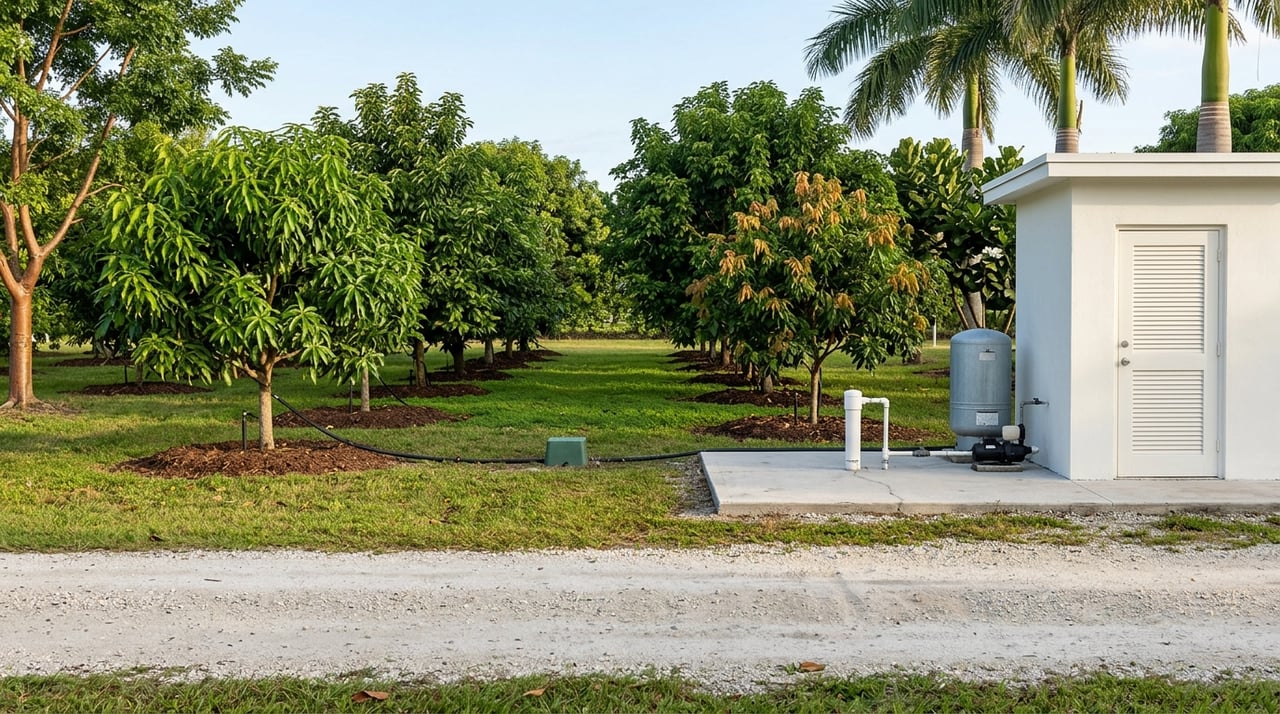
If you are looking at Redland acreage as more than just a place to build, you are asking the right question. In this part of South Miami-Dade, land can carry operational value, long-term flexibility, and family significance all at once. When you understand how zoning, agricultural use, infrastructure, and scarcity work together, you can evaluate acreage with much more clarity. Let’s dive in.
Redland holds a unique place in South Dade’s land story. Miami-Dade describes the historic Redland area as part of a major agricultural landscape surrounding Fruit & Spice Park, with farmland also serving as open space, water recharge area, and wildlife habitat.
That agricultural identity is not small or symbolic. According to Miami-Dade’s agriculture resources, the county has a tropical climate, winter production capacity, and USDA-recognized soils of unique importance. The county also notes that Miami-Dade ranks first in the United States in ornamental plants and second in Florida in overall farm production value.
Scarcity is a major part of the legacy-investment case. A 2025 county presentation reported about 52,551 acres classified as agricultural, with most acreage outside the Urban Development Boundary, while a 2023 county and UF/IFAS study projected the county would need at least 64,800 acres of agricultural land by 2030 to keep the industry economically viable.
For you as a buyer, owner, or long-horizon investor, that helps frame Redland acreage as a finite land base. It is not simply a homesite. It is land with economic, environmental, and long-term strategic relevance.
One of the first things to understand is the difference between zoning and tax treatment. In Redland, many parcels are governed by Miami-Dade’s AU Agricultural Use zoning district, which allows agricultural uses and single-family residences on five-acre lots, along with customary accessory structures and uses.
The county’s land use framework is clear about the purpose of the Agriculture designation. It is intended for agriculture, uses ancillary to and directly supportive of agriculture, and farm residences. Residential development is generally limited to one dwelling unit per five acres.
That matters because buyers sometimes assume acreage automatically creates broad development freedom. In practice, the value of a parcel often depends on how well your intended use aligns with agricultural rules, road access, water supply, sewage disposal, and any certificate or permitting requirements.
Agricultural zoning and agricultural property-tax classification are related, but they are not the same thing. Miami-Dade states that to receive agricultural classification, land must be used primarily for bona fide commercial agricultural purposes, the physical agricultural use must be in place by January 1, the application is due by March 1, and the property is reviewed annually.
If the use changes or stops, that classification can be removed. For legacy owners, this is a critical point. A parcel may be zoned for agriculture, but the tax treatment depends on actual, documented use.
Florida law provides another practical advantage for qualifying agricultural land. Under Florida Statute 604.50, nonresidential farm buildings, farm fences, and farm signs on lands used for bona fide agricultural purposes are exempt from the Florida Building Code and local code or fee requirements, except for floodplain-management regulations.
That does not mean every improvement is simple or unrestricted. It does mean bona fide agricultural use can affect how certain farm-related improvements are treated, which can matter when you plan operational infrastructure over time.
Acreage tends to hold value better when it can do something productive. In Redland, the strongest long-term uses are usually the ones that fit naturally within the county’s agricultural framework.
Miami-Dade’s 2025 agricultural land presentation shows major classified categories such as row crops, fruits and groves, tree nurseries, container nurseries, and in-ground nurseries. A related county study also identified vegetables, container nurseries, and orchards or groves among the largest acreage groups, based on the county’s agricultural land-use materials.
Nursery use is one of the clearest fits for Redland acreage, but it still requires compliance. Miami-Dade states that plant nurseries and tree nurseries require a Certificate of Use with a detailed site plan and must meet setback and parking requirements.
That process matters when you evaluate a parcel. A site may look ideal on paper, but layout, access, and operational planning still influence whether the property can support a compliant nursery business.
Equestrian use can also fit the agricultural framework when it is truly commercial. Miami-Dade’s agricultural classification guidelines say commercial horse boarding or horse breeding may qualify when the property includes support facilities such as stables, paddocks, horse training rings, or riding arenas, and when the use is documented as a commercial activity.
The same guidelines also make clear that personal horses for pleasure do not qualify in the same way, and that the often-cited rule of one horse per acre is only a general guideline. Each property is reviewed case by case under the county’s agricultural classification guidelines.
For some owners, agritourism creates a second layer of income and long-term utility. Miami-Dade allows rural event venues in agriculturally zoned areas and defines them as venues for weddings, receptions, corporate meetings, or similar gatherings, but operation requires a Certificate of Use.
The county also regulates parking, lighting, portable toilets, and the number and timing of larger or amplified events. In 2024, Miami-Dade approved the Miami-Redland Agritourism District, and the county said agritourism structures in that district are limited to 5 percent of the total parcel, with a maximum of 2.5 acres on a single parcel.
This is important if you are underwriting income potential. Event revenue can be meaningful, but it is not unrestricted. The land has to support the use physically and operationally, and the use has to fit county rules.
In Redland, site planning is not a side issue. It is central to value. The county’s own agriculture study maps track flood zones, soil drainage, water table elevations, wells, wellfield protection areas, road network, and parcel size, which signals just how important infrastructure is when evaluating agricultural land.
If you are considering a parcel for nursery use, equestrian use, or an event-related business, drainage and water access can affect both day-to-day operations and long-term viability. Emergency access, utility conditions, and site circulation also become more important as use intensity rises.
The county’s land use policies also note that business or industrial uses in Agriculture should have adequate water supply and sewage disposal. Rural event venue rules were written in part to reduce impacts on septic systems and neighboring wells, and county rules address emergency access and portable toilet requirements where sewer-connected restrooms are not sufficient, as outlined in the CDMP Land Use Element.
For legacy ownership, this creates a simple truth: water, drainage, and access are part of the asset itself. They are not just technical details for later.
Not all acreage trades on the same logic. In Redland, value tends to rise or fall based on a mix of scarcity, usability, location, and compliance.
Miami-Dade’s farmland preservation tools show the kinds of characteristics the county considers important: current farming activity, location outside the UDB, agricultural or open-land designation, parcel size, soil type, historical agricultural use, proximity to urban development, nearby protected or agricultural lands, and financial considerations, according to the county’s agriculture program information.
A 2023 county study found a large pricing gap between agricultural-classified land outside the UDB and land inside it. According to that study, agricultural-classified properties outside the UDB averaged about $54,200 per acre, compared with about $239,200 per acre inside the UDB. The same study also found agricultural land in the county had declined by more than 10 percent over six years.
Localized pricing can vary widely even within Redland. In a 2023 county memo regarding a vacant Redlands parcel, staff estimated a fair market value range of $60,000 to $200,000 per acre. That figure came from a specific acquisition context, so it should not be treated as a blanket benchmark, but it does show how much access, use, location, and development pressure can influence pricing.
If your goal is to hold Redland acreage for the long term, the most durable strategy is often preserving optionality. In practical terms, that usually means maintaining bona fide agricultural use, protecting drainage and water infrastructure, preserving road access, and making sure any revenue use aligns with county zoning and certificate requirements.
The 2023 county and UF/IFAS study projecting future acreage needs, combined with county preservation tools such as development-rights and conservation-oriented programs, supports a long-term view of Redland land as operating land first. That perspective can help you focus on what truly protects value over time.
A beautiful parcel may be emotionally compelling, but legacy value usually comes from the fundamentals. Can the property support a real agricultural use? Does it have the infrastructure to sustain that use? Does it preserve flexibility without creating compliance issues? Those are the questions that matter most.
If you are weighing a purchase, sale, or long-term hold in Redland, working with a team that understands both land value and property positioning can make a meaningful difference. Brittani Brookins offers thoughtful, high-touch guidance for clients navigating South Florida acreage, legacy properties, and strategic real estate decisions.
Whether you're a first-time home buyer in search of your dream home, a seller looking to downsize, or an investor looking for a great opportunity, working with a dedicated real estate professional can make all the difference.